

I’m guessing many of you who are personal development veterans ask yourself at one point or another, “Why am I still working on the same problem after ten years?”
You may say it out loud. You may type it into Google or Chat GPT. It becomes real when you ask that future self in the mirror, “Why am I still working on the same problem after ten years?”
It may not be exactly the same problem. Details change. Circumstances evolve. We get more self-aware, more knowledgeable, and often more successful.
Yet every so often, we come face-to-face with a familiar frustration and think “Haven’t I already worked on this?” “Didn’t I already learn this lesson?”
I know I have asked that of myself more than once!
Years ago, I heard General Colin Powell speak on the importance of discipline and consistency. Everything he said made perfect sense. I nodded along because I agreed with every point he was making. After all, what an incredible role model to follow! Sure, I could do that.

I had the great fortune to listen to many other incredibly successful people. Their message? Yep, discipline and consistency. And I nodded right along.
Recently an uncomfortable thought crossed my mind: I have been nodding in agreement with versions of this message for years.
read books about consistency. I attended seminars about habits. I filled journals with goals, plans, and commitments. I invested countless hours studying personal development.
Yet here I was, still negotiating with old behaviors, postponing important actions, or “squirreling” away from intentions I genuinely cared about.
REALIZATION is KEY – What am I refusing to see or let go of?
That realization wasn’t discouraging, though. It was enlightening. It forced me to ask a different question. Did I need more information? Did I need another webinar or another book?
The ultimate question: Why aren’t I creating the change I want? All this material keeps explaining how. (I do know how to read, and generally comprehend).
Then Mark Januszewski, author of Standing Tall, came along and I joined his Master Key Experience. The true masterminding he taught us, and the great material and proprietary exercises he shares, pointed me right where I needed to be, facing that need for discipline and consistency.
“The real secret of power is consciousness of power.” — Charles F. Haanel, The Master Key System
Before we can change a pattern or a habit, or a lack of either, we must first become aware that it exists, or that it’s missing. Then, as we learned studying the Master Key System in Mark’s program, we have to realize we have the power to make the change needed, to change something in our lives, or to manifest something in our lives.
As he shared, many of the beliefs limiting us operate so quietly in the background that we mistake them for reality rather than for conditioning.
The personal development industry has done a remarkable job of helping people become aware of new possibilities. Millions of people have been introduced to concepts such as goal setting, positive thinking, visualization, accountability, and habit formation Those ideas have value, and many people have benefited from them.
Yes, I did get some value, to be sure. I can’t be alone here. Mordor Intelligence reports the personal development market should hit $53.73 BILLION in 2026, with a projection of $70.55B by 2031. So, that means, there are still plenty of books, seminars, podcasts and coaching programs out there, plenty more to come, and tons of people wanting to know why am I working on the same problem after ten years.
Funny — if knowledge were enough, bookstores would have solved most of humanity’s problems by now. And had we paid attention since Socrates and others from many ages ago about knowing and growing ourselves, this world would be a very different place now.
KNOWLEDGE isn’t ACTION – Why am I Still Working on the Same Problem?
There is a difference between knowing what we should do and consistently doing it, though. I’m right back to the discipline and consistency Gen. Powell mentioned. Still not perfect at it yet, but I love being at a point where I can share my awareness with you.
Most of us already know a surprising amount about what we SHOULD be doing.
“Action is the food and drink which will nourish my success.” — Og Mandino, The Greatest Salesman in the World
We know we should exercise consistently. We know we should be more intentional with our finances. We know we should spend more time on meaningful work and less time on distractions. We know we should be kinder to ourselves and others.
I’ve also heard how we need to stop “SHOULD”ing on ourselves.
The challenge is applying what we know is true for us and good for others day after day, especially when life becomes complicated.
“Knowledge does not apply itself.” — Charles F. Haanel, The Master Key System, Part One
For a long time, I believed that successful people simply possessed greater willpower. They have an ability to stay focused when everyone else became distracted. They followed through on commitments while others lost momentum. They appeared disciplined in ways that felt almost mysterious.
I’ve learned, with Mark’s help. Thinking matters. Vision matters. The gap is between understanding a principle and living it consistently. That gap is where so many people struggle, including me.
“By thought, the thing you want is brought to you; by action you receive it.” — Wallace D. Wattles, The Science of Getting Rich
The people I saw creating lasting change weren’t necessarily forcing themselves to do difficult things every day. There was something different in the way they saw themselves. Their actions flowed naturally from an identity and effortlessness they accepted rather than from a constant battle of willpower.
For example, a person who identifies as healthy approaches food and exercise differently than someone who is perpetually trying to lose weight. A person who sees themselves as financially responsible makes different decisions than someone who is always trying to get their finances under control. A confident speaker walks onto a stage differently than someone who is desperately trying to appear confident.
TRUE IDENTITY – Who am I and Who am I Meant to Be?
I began to see the behavior followed the identity far more often than the identity followed the behavior.
That observation explained why so many personal development efforts begin with enthusiasm and end with frustration. They focus on having you change actions, or take massive action, while leaving the underlying self-image untouched. They try to get you to act like a different person while you’re continuing to believe you’re the same person you’ve always been. From those deeply protected beliefs come everything – thoughts, actions, results.
Imagine trying to sail across a lake while keeping one anchor submerged. You work harder. You row faster. You become more determined. Yet the anchor continues to create resistance no matter how much effort you apply.
Many people approach personal growth in exactly this way. They increase effort without addressing the subconscious beliefs that continue pulling them back toward familiar patterns.
When I got this notion, my understanding of personal development began to change.

I stopped asking, “What do I need to learn next?” and started asking, “What belief is creating this result?” and “What new belief and habits can I adopt to replace the limits?”
“Our life is a blueprint of the world within. To alter the trajectory of our lives, we’ve got to do the work on the world within… massive action is a waste of time until we change our thought habits.” — Mark Januszewski
One of the notions I have heard Mark Januszewski return to repeatedly is that people don’t ultimately get what they want—they get what they are. At first glance, that may sound discouraging.
For me, it is empowering. If our results are actually connected to our habitual thinking and self-image, then changing those patterns can change our future.
Mark shares some great information in the class about the subconscious mind. I learned that many of our behaviors are not conscious choices in the moment. They are conditioned responses that have been reinforced over years, sometimes decades. They feel natural because they have become familiar. We don’t usually question them because they operate below our conscious awareness… in the comfort zone.
Think about how many beliefs we absorb before we’re old enough to evaluate them. We learn ideas about money, success, relationships, health, achievement, failure, and our own worthiness from the people and environments around us. Some of those beliefs serve us well. Others quietly limit what we believe is possible.
REALITY of LIMITATIONS – Where Did All the Obstacles Come From?
The challenge is that those limitations rarely announce themselves.
Instead, they show up as hesitation when an opportunity appears. They show up as procrastination when an important project needs attention. They show up as self-doubt just when we’re about to take a meaningful step forward. We often interpret these experiences as personal weaknesses when they may simply be evidence of deeply conditioned thinking.
Looking back, I can see that some of my greatest breakthroughs occurred when I stopped trying to overpower old patterns and started understanding them. Awareness created options. Repetition created new habits. Consistent practice gradually created a new self-image.
That process was slower than I wanted, but far more rewarding than I expected.
One of the reasons I continue to appreciate the work of Mark Januszewski is that it addresses a part of personal development that many programs barely touch. Rather than focusing exclusively on motivation or goal achievement, his work emphasizes understanding and reshaping the subconscious patterns that drive behavior in the first place. He wants to give us the knowledge to program our own lives so we can meet our purpose.
PROGRAMMING SUCCESS – What Have I Created and How Can I Change It?
This distinction may sound subtle, but in practice it changes everything.
We are already creatures of habit. The question is not whether habits control us, but which habits do. His scroll reminds us that lasting change comes less from occasional inspiration and more from daily repetition (there’s that discipline thing again).
“I will form good habits and become their slave.” — Og Mandino, The Greatest Salesman in the World
Motivation can help us get started, and inspiration can help us see new possibilities. Neither, however, automatically changes the conditioning that has been directing our choices for years. Lasting transformation requires something deeper. It requires examining the beliefs, habits, and mental patterns that have become part of our identity.
That is often where the real work begins.
It is also where many people discover why they have been struggling with the same challenges for so long. The issue was never a lack of intelligence, effort, or desire. The issue was that they were attempting to create external change while an internal blueprint remained largely unchanged.
If you’ve ever found yourself asking why an old problem keeps reappearing despite years of personal growth, you’re not alone.
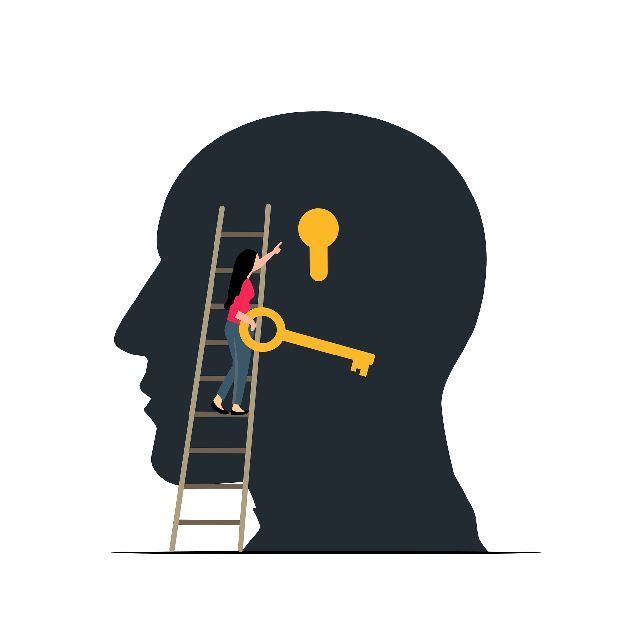
In fact, it’s a sign of progress. It suggests you’ve reached the point where more information is no longer enough. You’ve begun looking beneath the surface for the causes rather than the symptoms.
And in my experience, that’s where magic starts.
If you’d like to explore a deeper approach to personal development and learn more about the principles Mark teaches, visit markjtrains.com. You may discover, as I did, that the missing piece isn’t another technique. It may be a new understanding of how lasting change actually occurs and problems actually go away.

Ooh, this one hit close to home, Day! Thank you for this thoughtful examination of what keeps us stuck, and more importantly, what to do about it!
Thank you, Arlene. You are definitely a great example of the miracles that happen when you get unstuck. Thanks for checking out my post!
I count it a genuine privilege to follow your blog posts, Day. Here you provide a strategy for getting the most out of going through the Master Key Experience: focus on what is preventing oneself from changing. Ask the questions, look for answers, intentionally change the old blueprint where it diverges from what we really want. I find myself going beyond mere reading of what you have written to studying and interacting with your thoughts as I am naturally drawn into R2A2: recognize -> relate -> assimilate -> apply, by them.
Such a beautifully written blog, all very relative and poignant, especially to how i feel today, yet “The need to stop “SHOULD”ing on ourselves.” comment hits as deep as anything i have learned over the past decade with this program. Thank you